
Bexar County
Stormwater Quality
Permit Services
…designed to get your permits approved
Simple up front pricing
Next day rush services available
Custom plans to meet your project needs
Getting started is easy
2
Fill out the project information form and upload your plans
After submitting your order, you’ll receive an email to upload your plans
3
48 to 72 hours later, you’ll receive your SWPPP
Need it faster? Please contact us; we’re here to help you get your project started.
Do you need a Bexar County Stormwater Quality Permit?
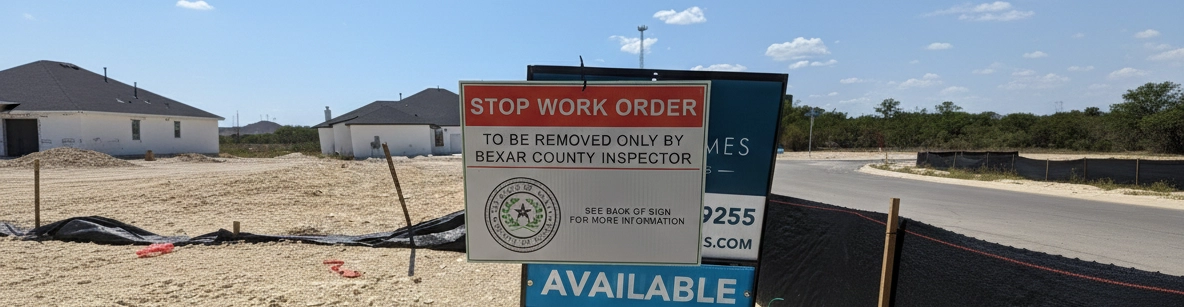
The Bexar County Stormwater Quality Program
The Bexar County Stormwater Quality (SWQ) permit process began in 2009, when Bexar County received approval from the Texas Commission on Environmental Quality (TCEQ) for its Municipal Separate Storm Sewer System (MS4). This regulatory program, established under the Clean Water Act and managed by the U.S. Environmental Protection Agency (EPA), is intended to reduce stormwater pollution entering county infrastructure such as drains, pipes, and ditches. A copy of the Bexar County development code can be found at Bexar.org. Unsure which jurisdiction your property falls within? Use the Bexar County Jurisdictions Web Map.
When is a SWQ permit required?
Projects disturbing one or more acres, or is part of a Larger Common Plan of Development as regulated under the Texas Commission on Environmental Quality (TCEQ) Construction General Permit No. TXR150000, you are required to develop a Stormwater Pollution Prevention Plan (SWPPP) and obtain permit coverage from TCEQ and Bexar County. Disturbance includes clearing, grading, excavating, or other construction-related activities (e.g., stockpiling of fill material, demolition).
Required Submittals
Stormwater Quality (SWQ) Permit
- – $500 application fee
- – Stormwater Pollution Prevention Plan
- – Erosion and Sediment Control Plan
- – Construction Plans: Grading plan, utility plan, stabilization plan, etc.
- – Polygon shape file
- – TCEQ CZP/WPAP approval letter (for sites over Edwards Aquifer Recharge / Contributing Zone)
Post Construction Permit
- – $0 to $250 application fee based on your application type
- – Storm Water Quality Control Measures Worksheet
- – Impervious Cover exhibit with a breakdown
- – Supporting Documents for all mitigation points achieved.
- – TCEQ CZP/WPAP approval letter (for sites over Edwards Aquifer Recharge / Contributing Zone)
- – Approved COSA Tree Permit (COSA ETJ only)
- – Permeant BMPs Plan & Profile approved by TCEQ (subdivision, commercial, industrial)
- – Maintenance Plan for permanent BMPs (subdivision, commercial, industrial)
The Review Process
| Review Phase | Review Time | Review Target |
|---|---|---|
| Submital Review | 7 to 14 days, depending on the volume of submittals | Incomplete submittals. Bexar County will not place your project into the queue until the missing items have been provided. |
| Initial Review | 30 days from date received | Plan review. If your plans include errors or missing information, you’ll receive comments outlining what needs to be corrected before moving forward. |
| Second Review | 15 days from date received | Review revisions. If any items are not fully addressed, the reviewer will provide additional comments for further revision. |
The Bexar County Stormwater Quality review process typically takes two to three months and may take longer during high-volume periods, usually from December through July. However, you can rest assured that here at Smart SWPPP we have the experience, resources, and tools to guide your project successfully through the review process.
Small Site SWPPP
For projects less than 5 acres
$599
Includes
Prepared TCEQ Construction Site Notices
Sign and complete all documents electronically
Submittals to Bexar County to start and end project
72 hour turnaround time
Large Site SWPPP
For projects 5 acres and up
$699
Includes
Prepared TCEQ Notice of Intent application
Prepared TCEQ Construction Site Notices
Submittals to Bexar County to start and end project
72 hour turnaround time
TCEQ Notice of Intent
Prepared permit application
$99
Ideal for
Projects that have a SWPPP but need their TCEQ TXR150000 Permit
Includes
Prepared TCEQ Construction Site Notices
Submittals to Bexar County to start and end project
48 hour turnaround time
Bexar County Stormwater Quality (SWQ) Permit
Call 1-888-363-0022
Ideal for
Developers and home builders
Erosion and Sediment Control Plan with Stabilization Plan
Impervious Cover Figure and GIS Shape File
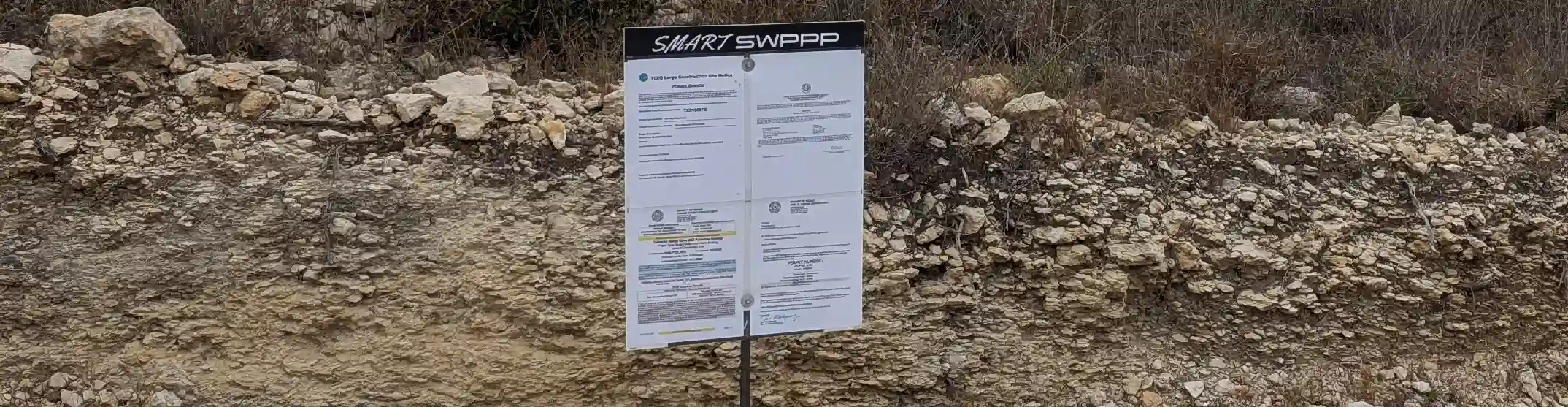
Sign with all required TCEQ and Bexar County Postings
Small Site SWPPP
For projects less than 5 acres
Large Site SWPPP
For projects 5 acres and up
TCEQ Notice of Intent
Prepared permit application
Bexar County Stormwater Quality (SWQ) Permit
$599
$699
$99
Call 1-888-363-0022
Includes
Prepared TCEQ Construction Site Notices
Includes
Prepared TCEQ Notice of Intent application
Ideal for
Projects that have a SWPPP but need their TCEQ TXR150000 Permit
Ideal for
Developers and home builders
Includes
Sign and complete all documents electronically
Submittals to Bexar County to start and end project
72 hour turnaround time
Includes
Prepared TCEQ Construction Site Notices
Submittals to Bexar County to start and end project
72 hour turnaround time
Includes
Prepared TCEQ Construction Site Notices
Submittals to Bexar County to start and end project
48 hour turnaround time
Includes
Erosion and Sediment Control Plan with Stabilization Plan
Impervious Cover Figure and GIS Shape File
Sign with required TCEQ and Bexar County Postings
Frequently Asked Questions
“Construction” refers to actions that result in a disturbance of the land, including clearing, grading, excavating, and other similar activities.
It also includes “construction-related activities,” areas that support the construction project such as stockpiles, borrow areas, concrete truck washouts, fueling areas, material storage areas and equipment storage areas. Construction activities that do not disturb land, such as interior remodeling, generally do not require TPDES or NPDES permit coverage.
Erosion and Sediment Controls are structural and non-structural practices used during construction to prevent soil loss (erosion control) and to capture sediment carried by stormwater before it leaves the site (sediment control). An Erosion and Sediment Control Plan outlines the location and schedule for implementing these measures, designed to retain pollutants on-site as much as practicable, taking into account local topography, soil type, and rainfall patterns.
Every Stormwater Pollution Prevention Plan is required to include a stabilization plan. The stabilization plan illustrates how the site will be returned to a stabilized state, whether through completion of the project with structures, pavement, and landscaping, or by restoring the site to its original condition.
Shapefiles are a geographic vector data format that can store information about the location, shape, and an unlimited number of attributes related to a geographic feature, such as a piece of property. Bexar County requires them to determine the location of a project in relation to jurisdictions, sensitive areas, and infrastructure.
3 to 5 business days, depending on scope. Developing all plans (SWPPP, erosion and sediment control, stabilization, and impervious cover figures) typically takes 5 business days.
2 to 3 months. Our residential submittals rarely receive comments, leading to a faster turnaround time.
- – in separate stages
- – in separate phases
- – in combination with other construction activities
- – plats
- – blueprints
- – marketing plans
- – contracts
- – building permits
- – public notice or hearing
- – zoning requests
It can include one operator or many operators.
Example: A subdivision is being developed. You are building homes on 2 acres, another company is clearing 3 acres in the next phase, and a contractor is excavating another 0.5 acres for a pond. In this case, the total area that would be disturbed is 5.5 acres. As a result, each operator would be subject to the requirements associated with disturbing 5 or more acres.